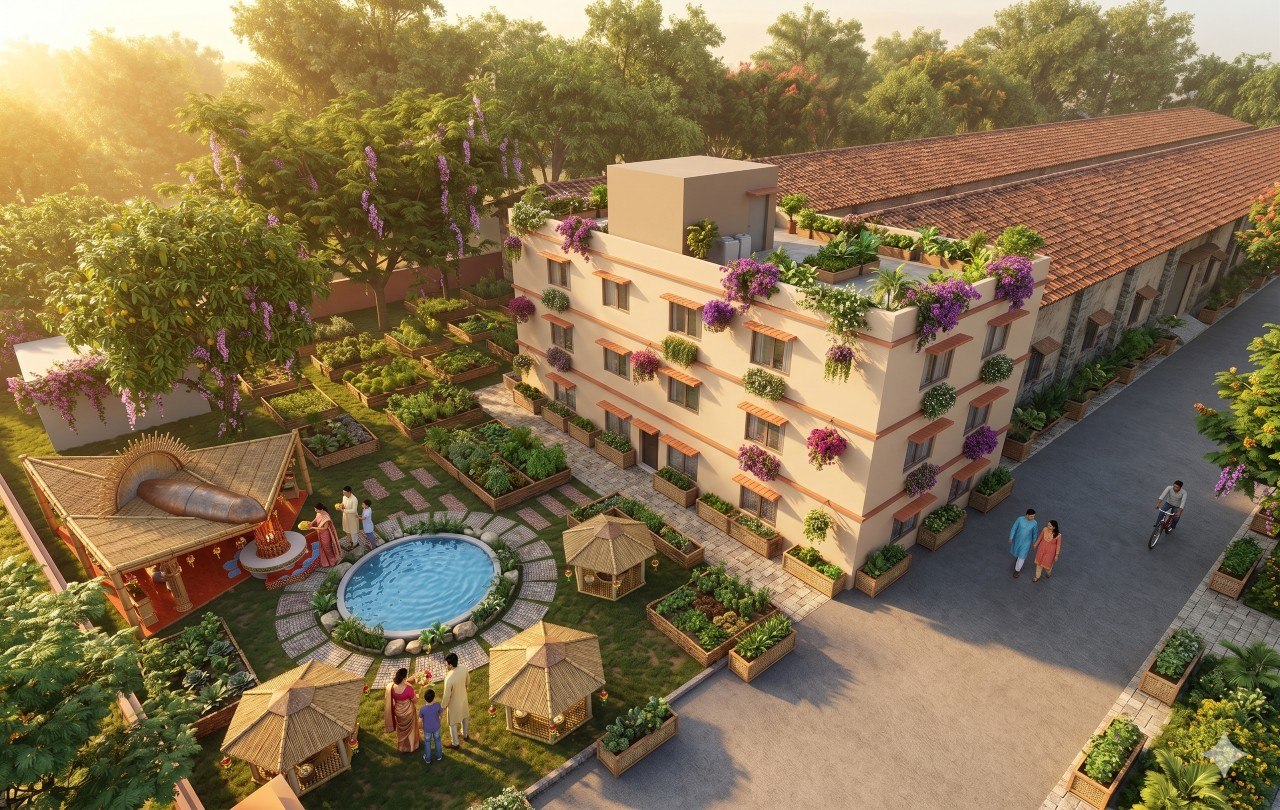
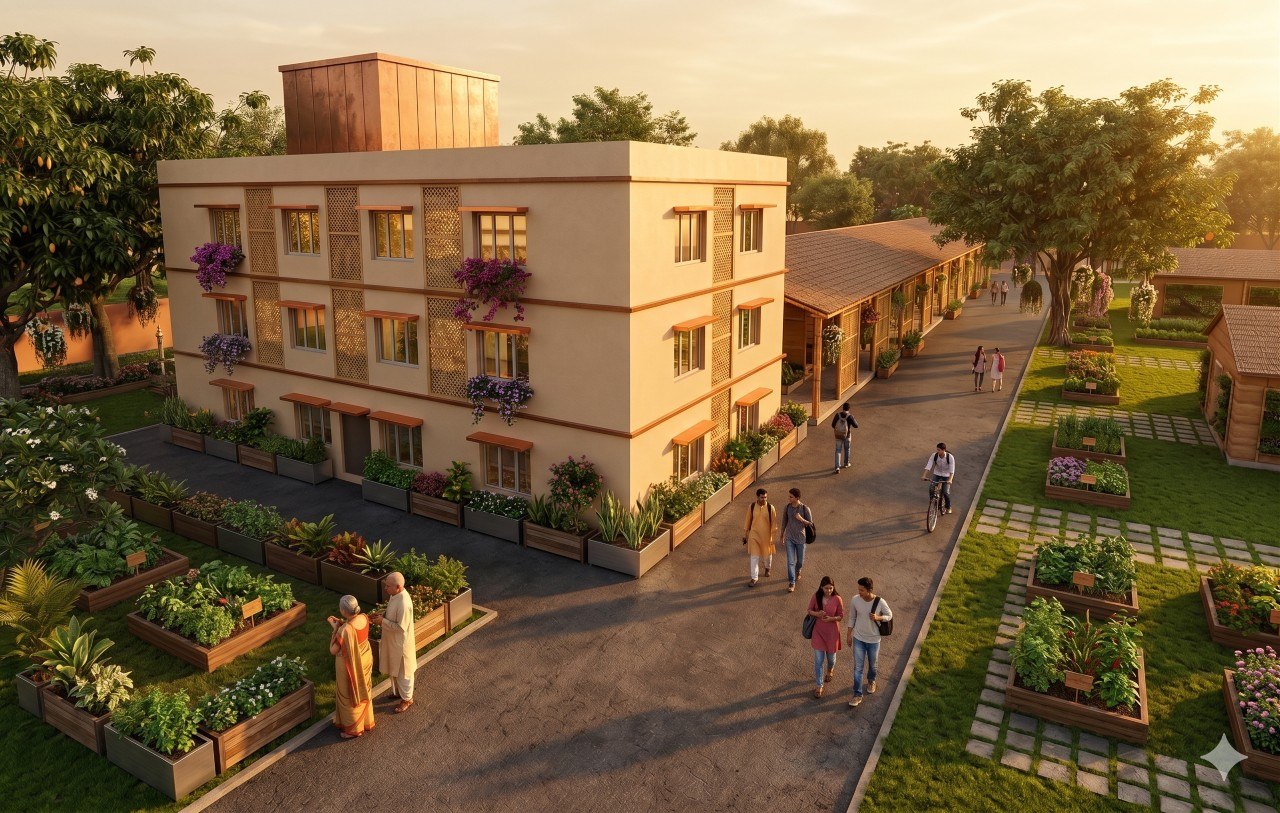
This is your 1.5 acres.
12 weeks from now.
Kalyani Industrial Estate × KarmYog Vatika
⌄
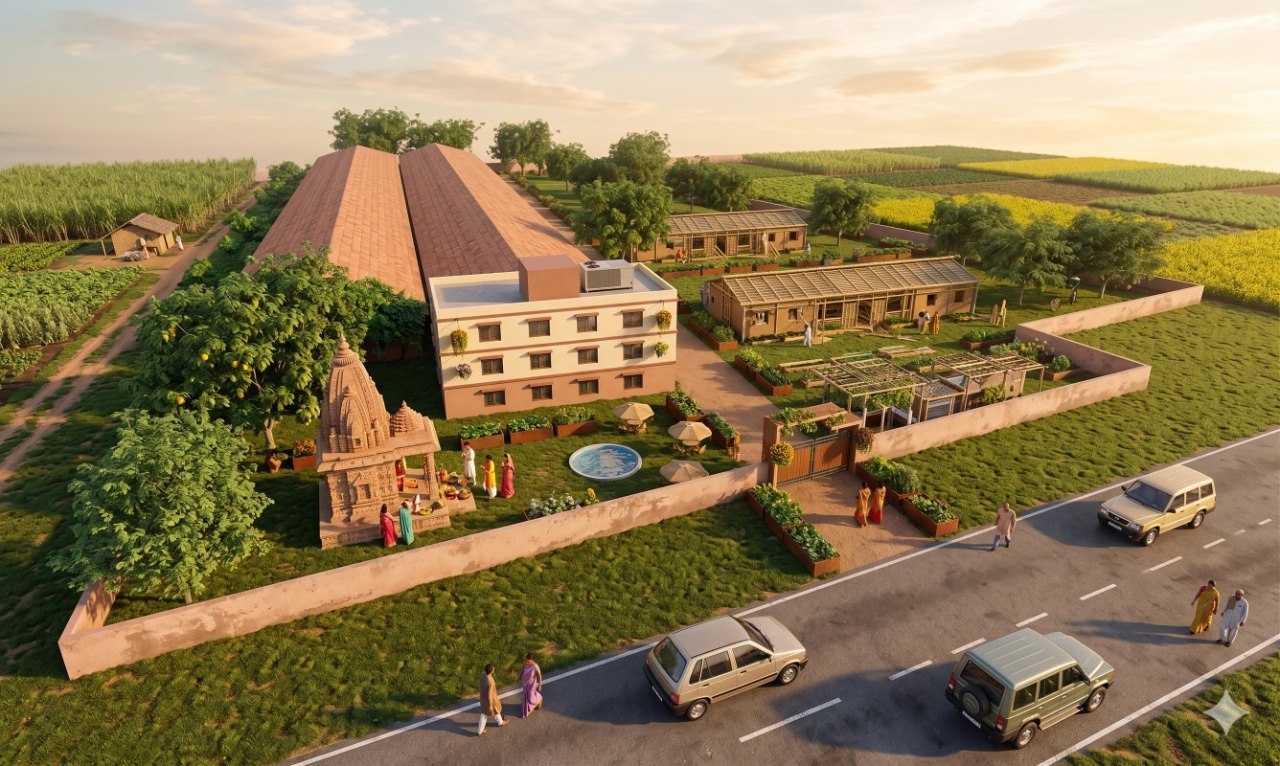
You own 1.5 acres inside a secure factory campus.
Right now, it produces nothing.
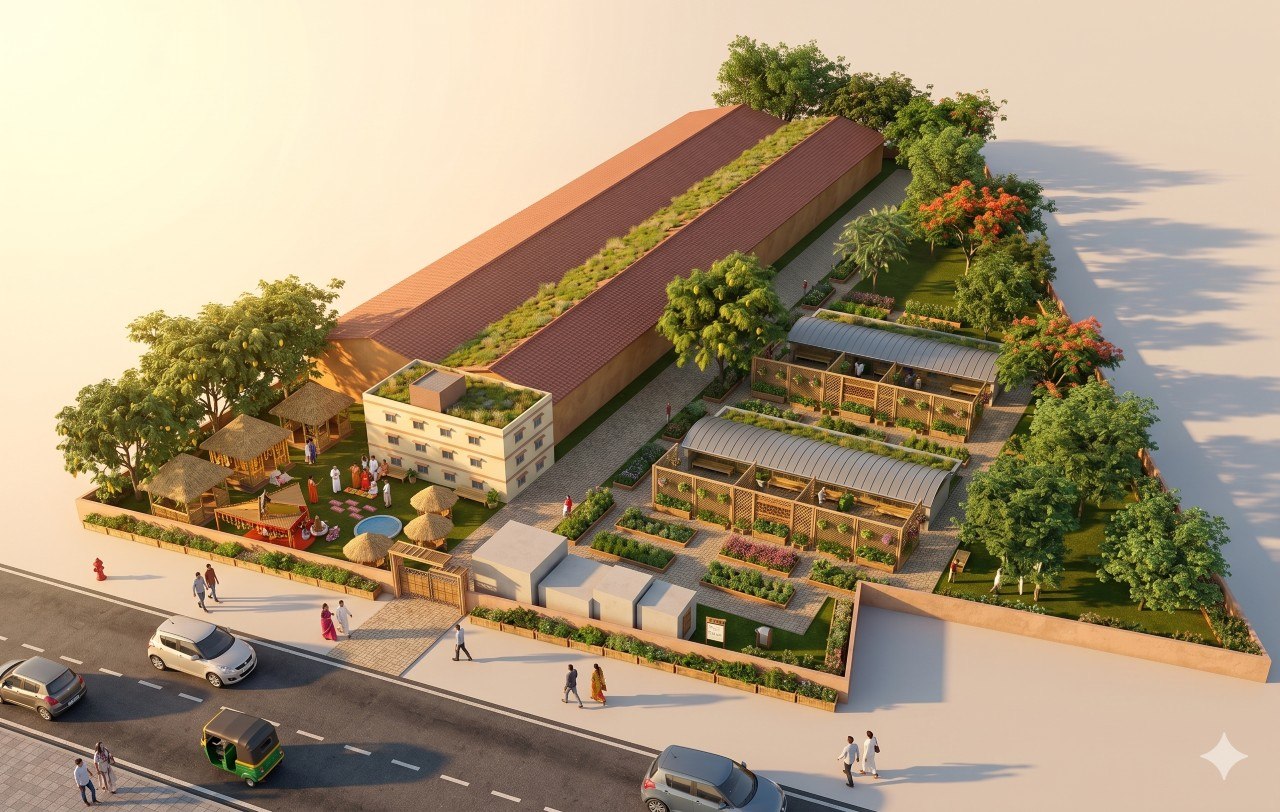
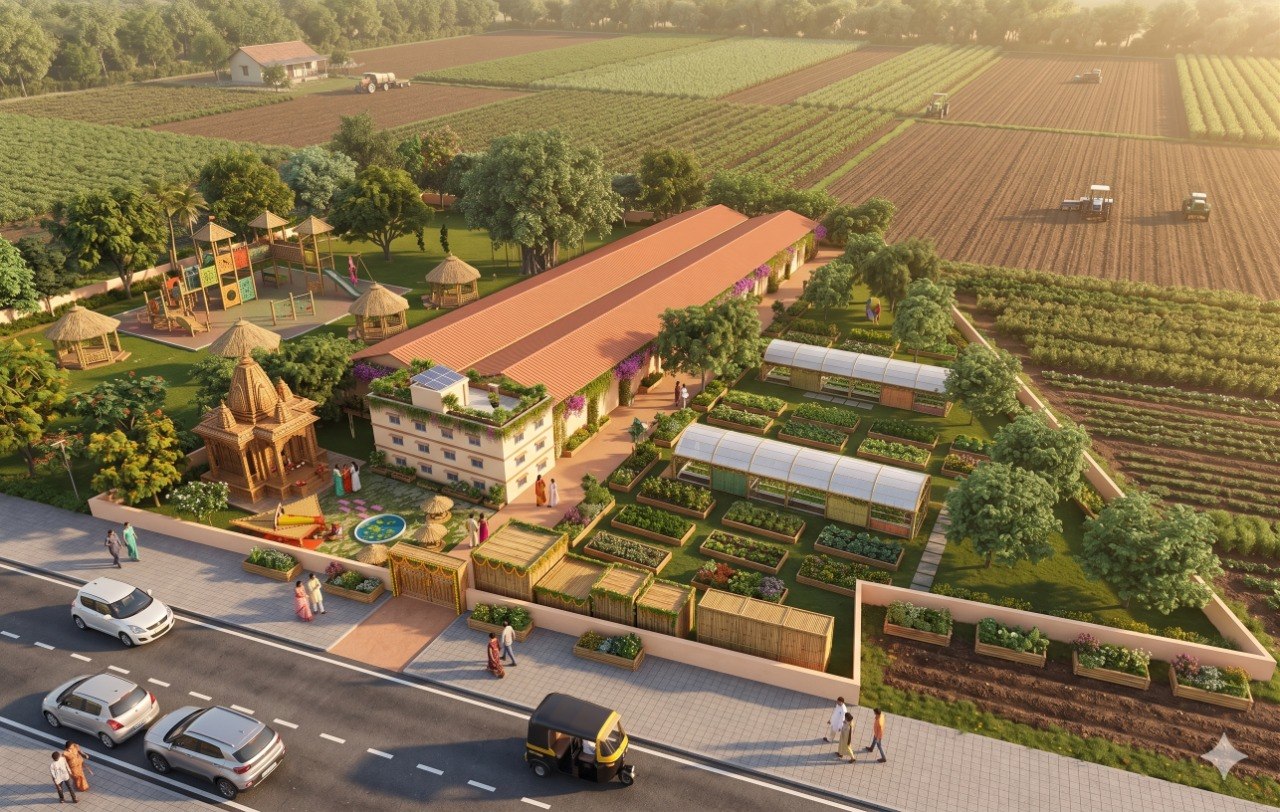
We turn idle industrial land into a self-sustaining biophilic sanctuary — organic farm, native orchard, wellness club, and a permanent, compounding asset.
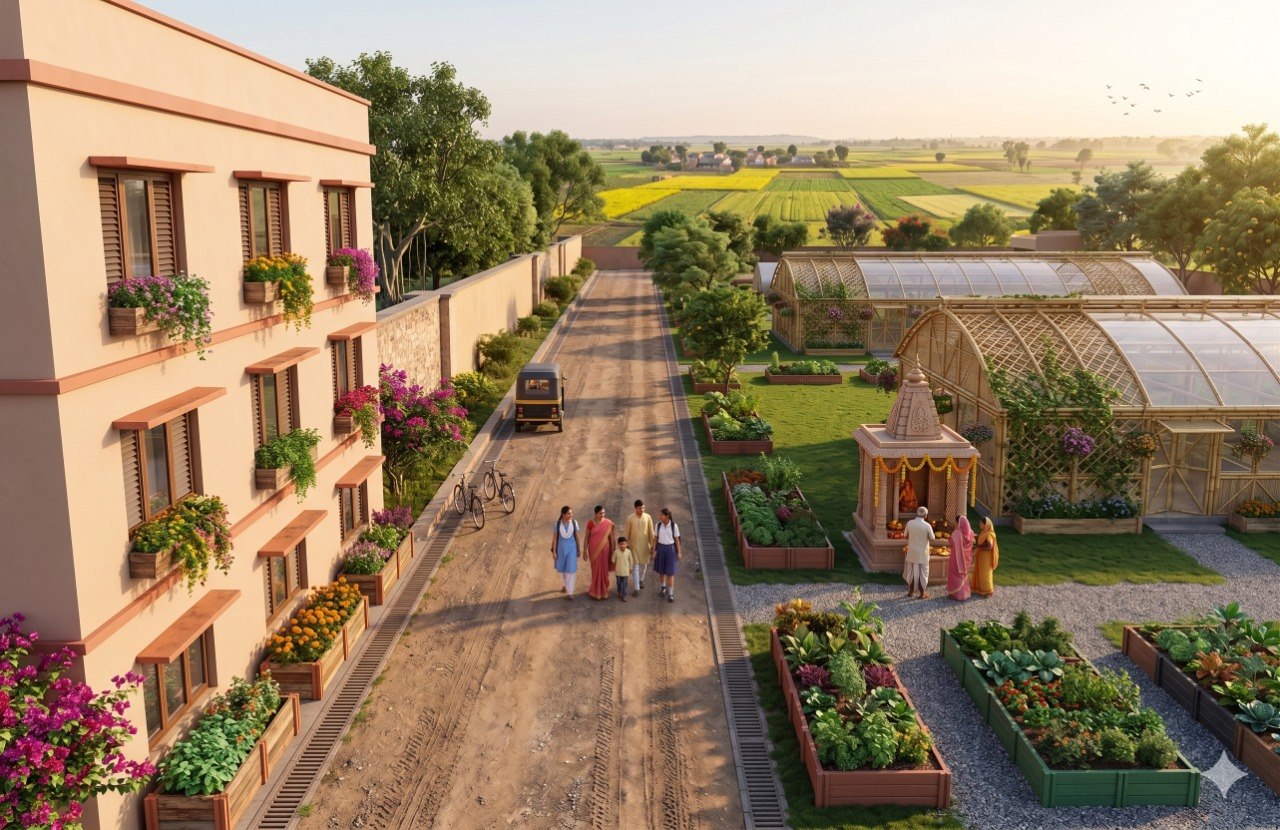
Zone A · 2,200 sq m · 36% of site
Eight raised-bed clusters. Drip irrigation. Year-round rotation — brinjal to turmeric, mushrooms to microgreens. First harvest hits the family table in four months.
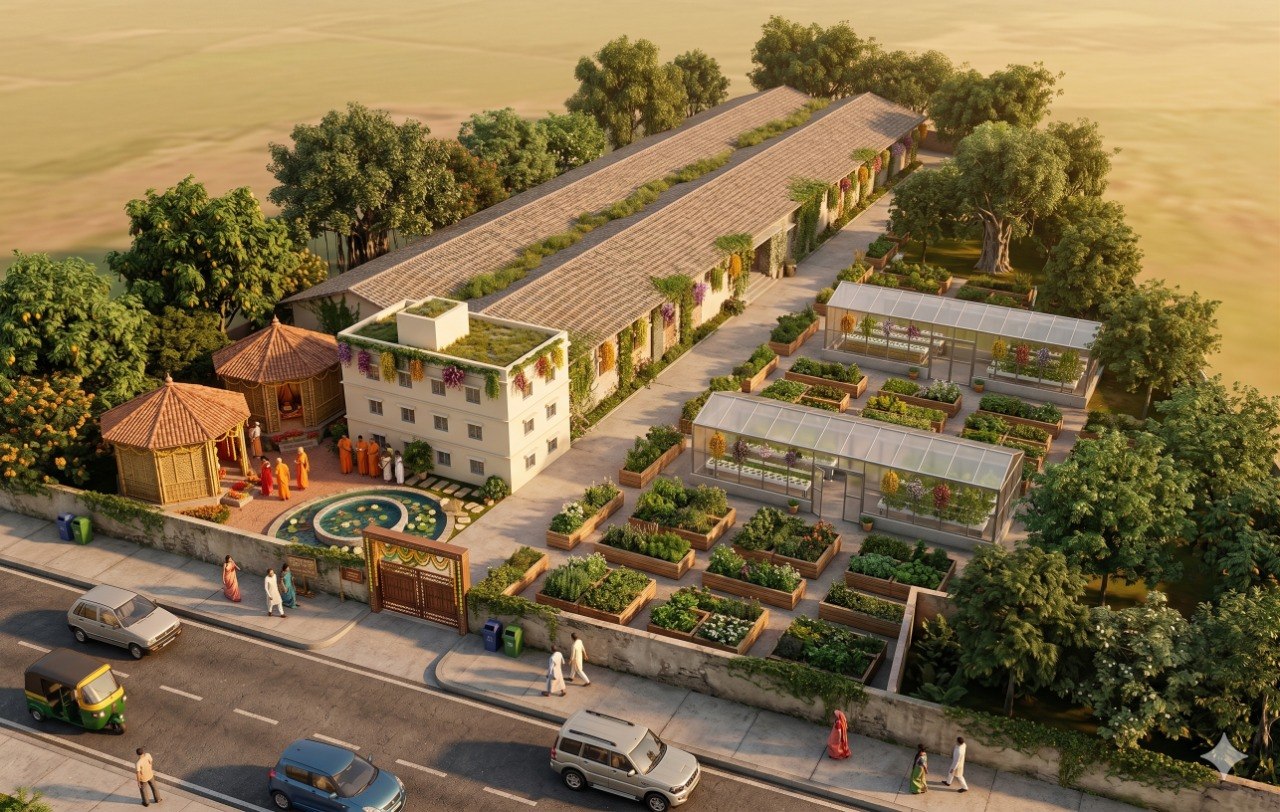
Zone B · 1,200 sq m · 20% of site
Fifty grafted native fruit trees. Mango, guava, lemon, papaya, banana, dragon fruit. Grafted trees fruit in eighteen months, not five years. They appreciate for decades.
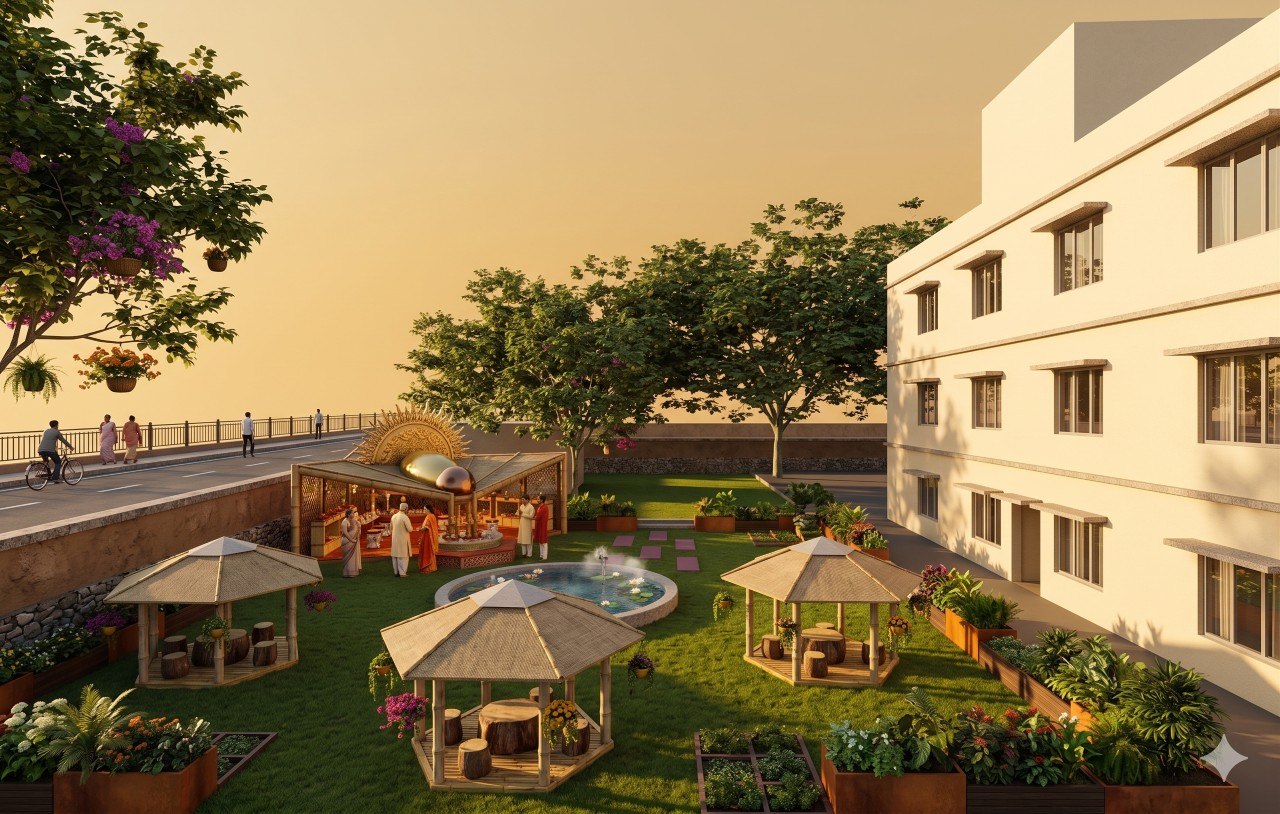
Zone C · 900 sq m · 15% of site
Bamboo pavilion seating forty. Reflecting pool. Jasmine corridors. Five sensory layers designed for corporate retreats, family gatherings, and weekend wellness. Revenue from Month 9.
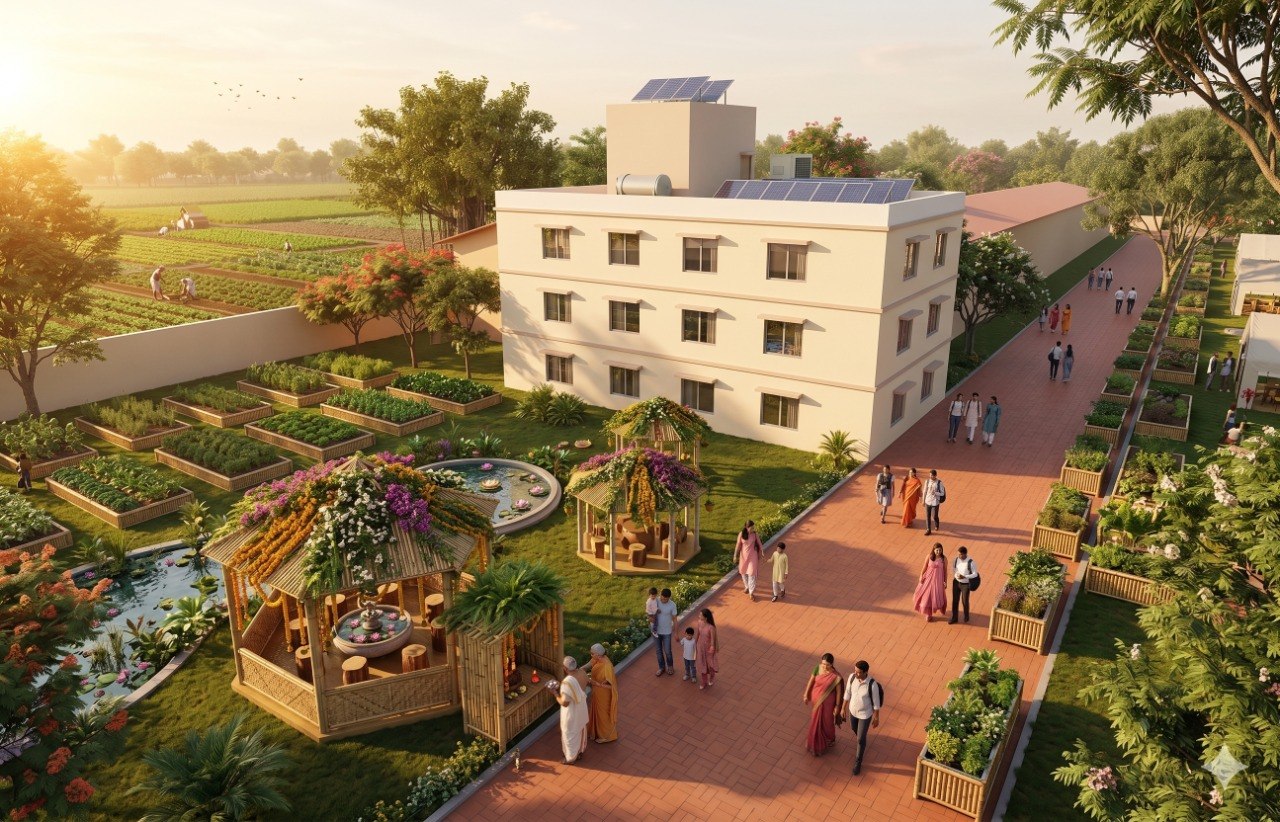
Zone D · 500 sq m · 8% of site
Seedling nursery. Vermicompost beds producing 500–700 kg per month. Dedicated mushroom cultivation — oyster and paddy straw. The site feeds itself.
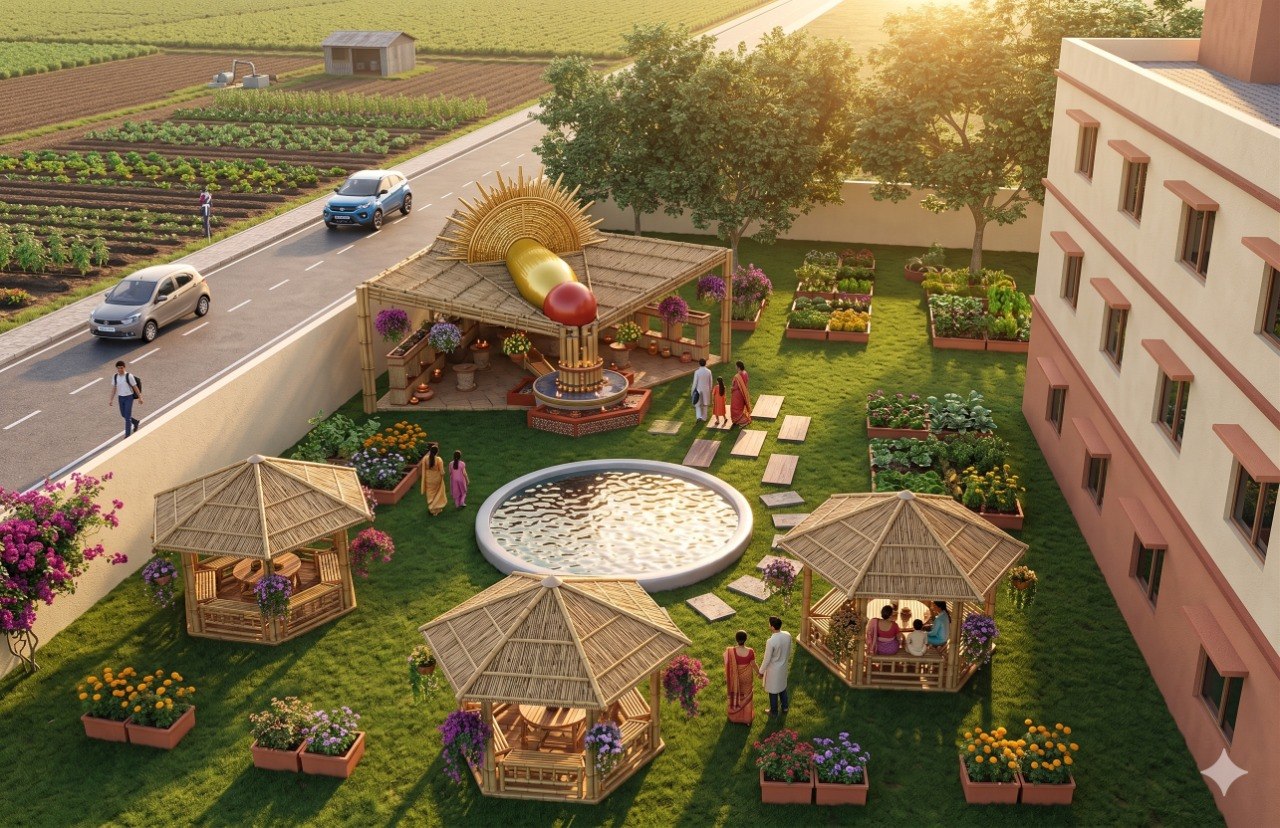
Zone E · 400 sq m · 7% of site
Rainwater collection. Ornamental fish ponds. Aquatic plants. Beautiful and functional — every drop harvested, every surface alive.
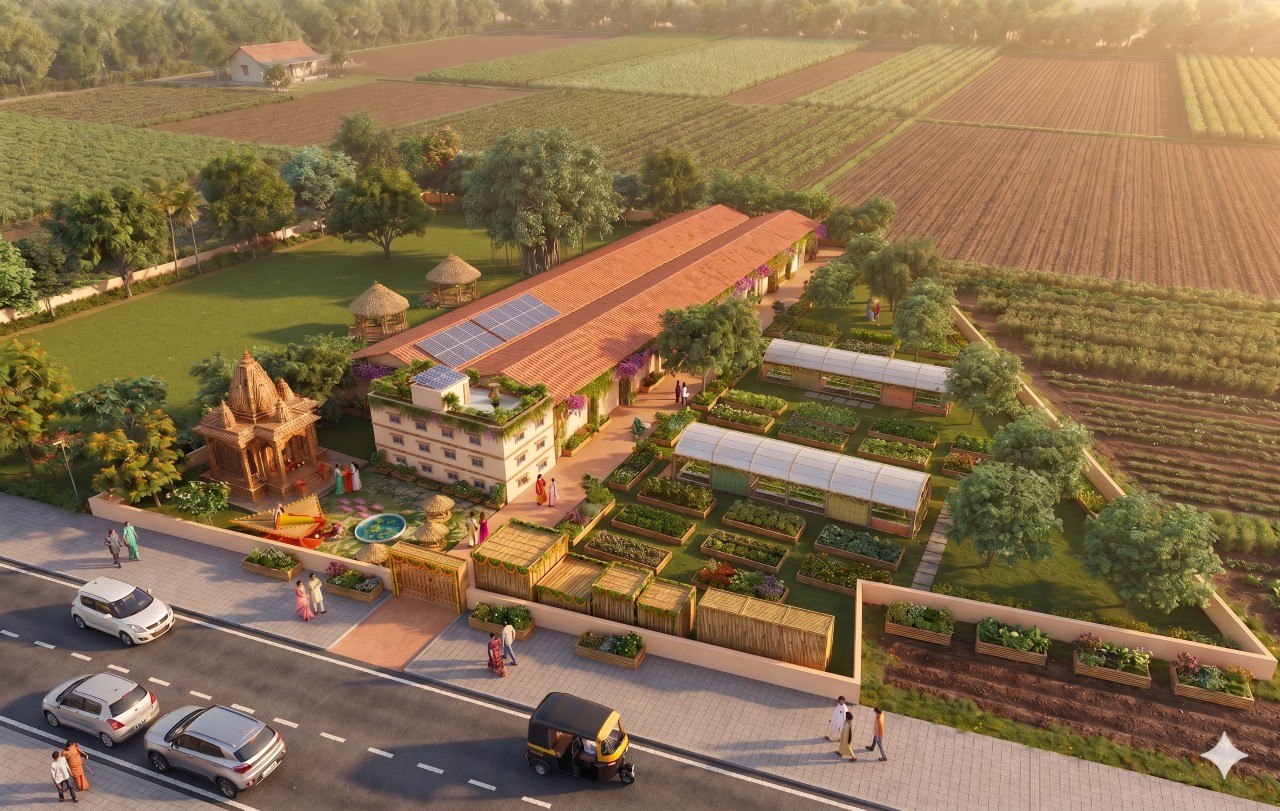
Zone F · 870 sq m · 14% of site
Controlled-environment greenhouse. Solar panels. Bore well. CCTV. The invisible infrastructure that makes everything else work.
Months 1–8
Site designed, built, and planted. First vegetables reach your kitchen within four months. Vatika space ready for private gatherings. Paludarium and rainwater system commissioned.
Months 9–20
Production scales. Surplus flows as fresh produce boxes to factory offices, sister concerns, and key relationships. Vatika hosts two-plus events per month. Club memberships open.
Months 21–36
Fruit trees bearing. Produce sold commercially. Corporate wellness workshops. School visits. Club revenue. All investment recovered. Model ready for replication across your portfolio.
The entire capital investment. Land preparation, pavilion, bore well, greenhouse, planting material, CCTV — everything. KarmYog Foundation absorbs ~₹5L in expert supervision and AI-based project management at no extra cost.
Operational cost. Three-person on-site team plus consumables. The Foundation receives 25% of all produce in lieu of consulting fees — no monthly management charge.
Revenue at full production. Vegetables, fruit, events, club memberships, compost, greenhouse produce, and fish. The site pays for itself, then keeps paying.
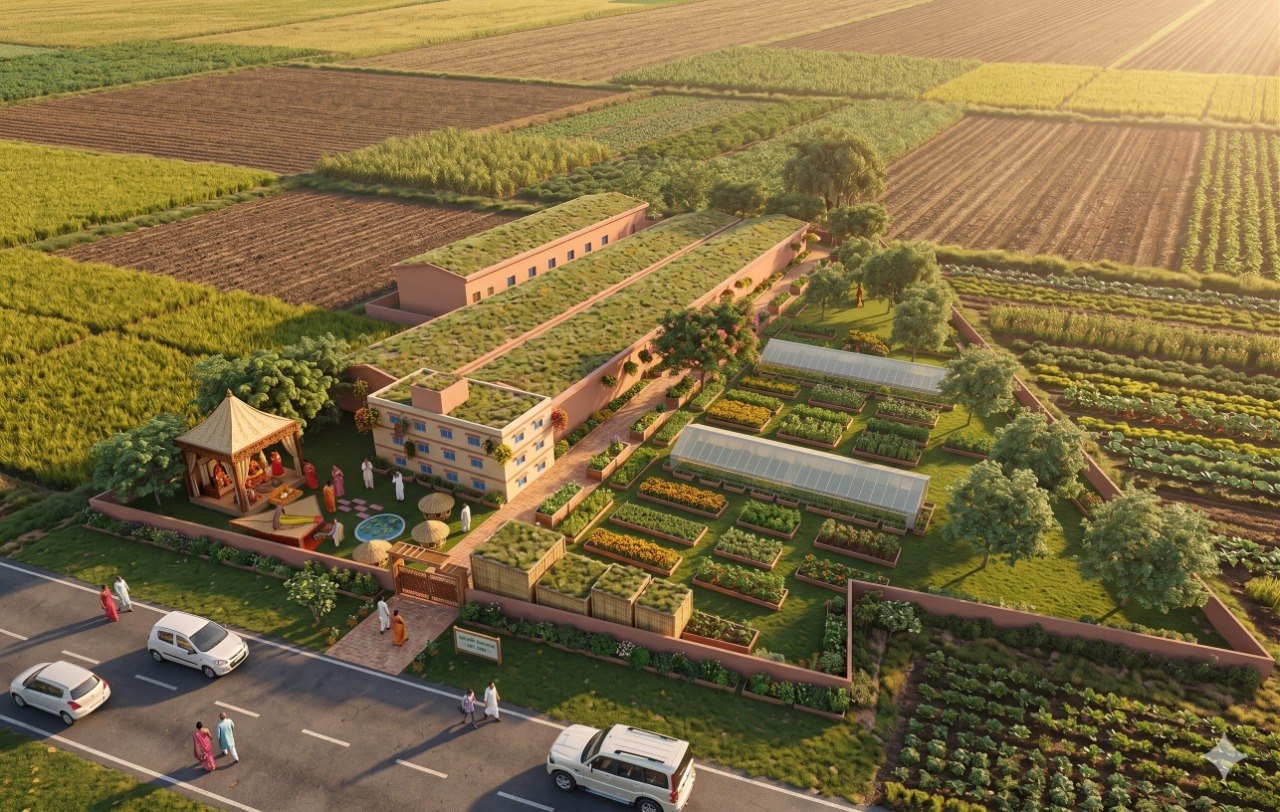
Site two costs ₹18–20L and takes 10 weeks.
Site three costs ₹15–18L and takes 8 weeks.
The design, the species list, the supplier network, the trained kaarigar team — they all carry forward. Every plot in your portfolio can look like this.
Reena J Sarkar
Co-Founder, KarmYog for the 21st Century Foundation
+91 98300 24611 · reenajs@ky21c.org

Proposal valid through 30 June 2026